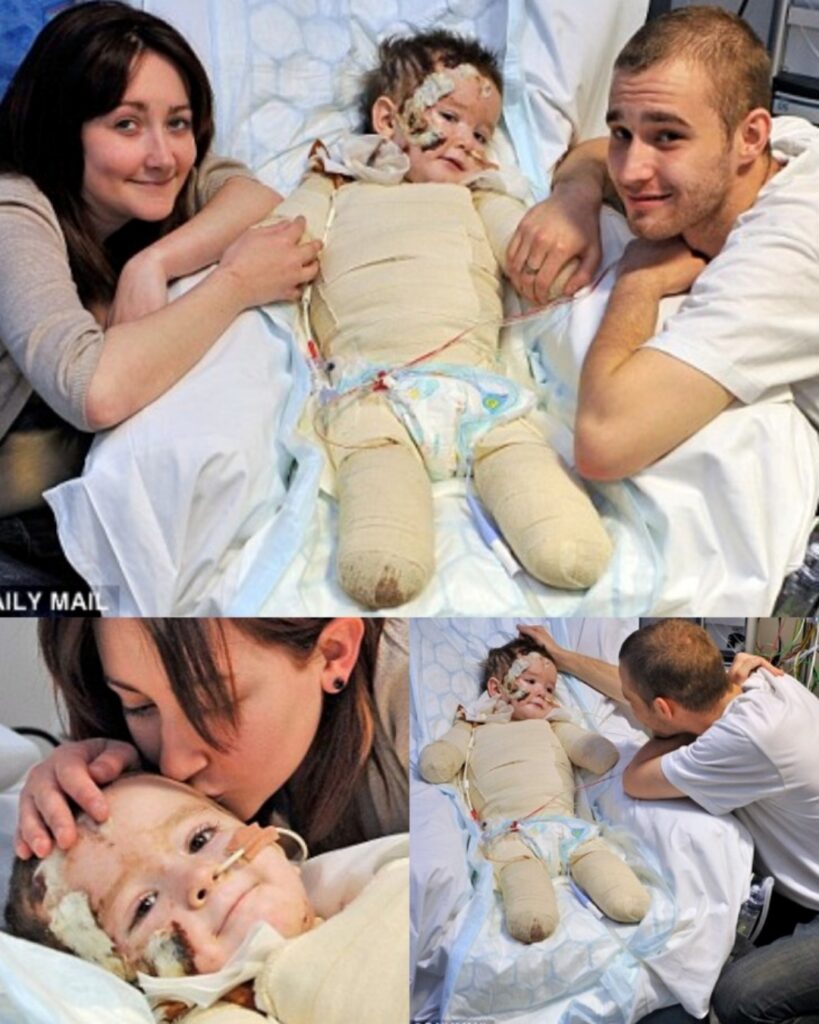
It began as an ordinary day—breakfast crumbs on the table, a favorite toy left on the floor, the small and steady rhythms of family life. By nightfall, everything had changed. In just a few hours, devastating meningitis and septicaemia tore through a child’s body with terrifying speed, turning laughter into sirens and a routine afternoon into a desperate fight for survival.
At first, the signs were subtle: a fever, a complaint of feeling unwell, a tiredness that seemed heavier than usual. But the infection was merciless. Beneath the surface, bacteria flooded his bloodstream, overwhelming his tiny body. By the time his parents reached the hospital, doctors were already moving with urgent precision. Monitors beeped sharply. Nurses spoke in hushed, rapid tones. Words like “critical” and “unstable” hung in the air, thick with dread.
The infection spread like wildfire, attacking his organs, shutting down his circulation. His hands and feet began to lose color as his body struggled to keep blood flowing to his heart and brain. Machines breathed for him. Medication surged through IV lines in a race against time. His parents stood helplessly beside the bed, gripping each other’s hands, whispering promises into ears that could not respond.
Then came the unthinkable conversation. To save his life, doctors would have to amputate all four limbs. The infection had destroyed the tissue beyond repair; keeping them would mean losing him entirely. It was a decision no parent should ever face. Yet in that unbearable moment, love demanded courage. Through tears and trembling voices, they gave consent—choosing life, even at a cost too painful to comprehend.
But even that sacrifice did not guarantee survival. His heart stopped.
The first flatline split the room open. Alarms shrieked. A team rushed in. His parents were pulled back as doctors fought to bring him back. After agonizing minutes, a faint heartbeat returned. Relief barely had time to settle before it happened again. A second flatline. Another desperate attempt. Another fragile revival.
Three times his small body gave up. Three times it was pulled back from the edge.
Each time he died, a piece of his parents’ hearts seemed to shatter. Each time he was revived, hope flickered—thin and trembling, but alive. They stood vigil through endless hours, speaking softly to their son, telling him to hold on, telling him how loved he was, how the world still needed him in it.
And somehow, against impossible odds, he survived.
When he finally opened his eyes days later, the world he returned to was different. His body had changed forever. The limbs that once reached for hugs and chased after toys were gone. The future his parents once imagined had shifted in ways they were only beginning to understand.
Yet he was alive.
In the quiet that followed the chaos, amid the grief for what was lost, there was also profound gratitude. His survival became a testament to modern medicine, to relentless doctors and nurses—but above all, to unbreakable love. His parents had faced terror beyond words, watched their child slip away and return again and again, and never stopped fighting for him.
His story is one of unimaginable loss and fierce devotion. It is a reminder of how quickly life can change, how fragile it truly is. But it is also proof that even in the darkest hours—when hope seems impossible—love can endure, and life can find a way forward.